
The Smart Beginner’s Guide to a Compact, Budget-Friendly Home Gym
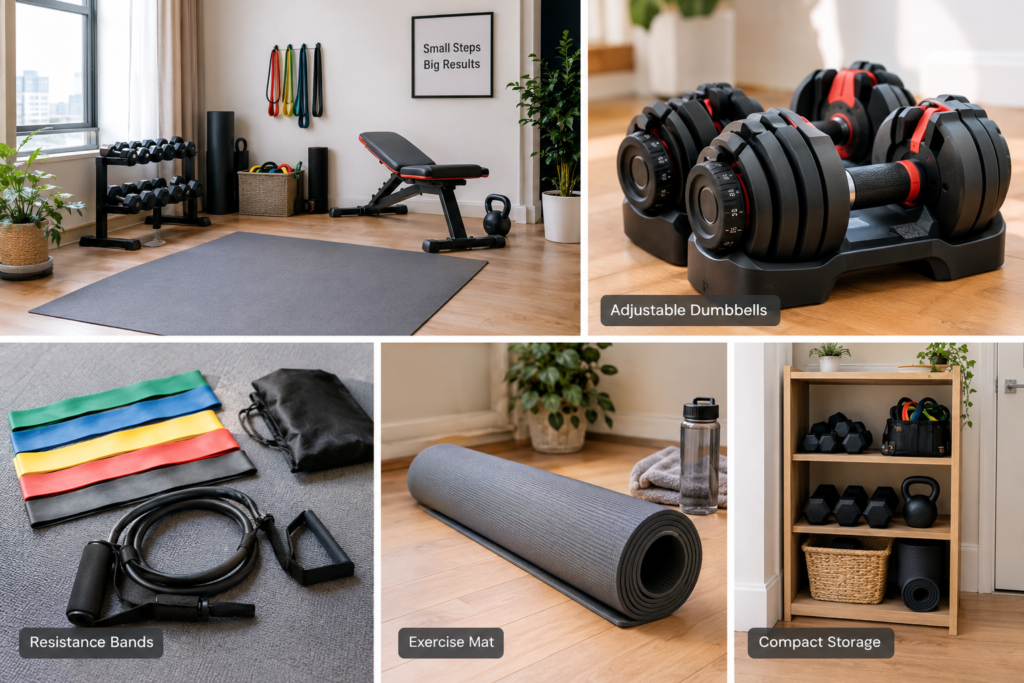
The Smart Beginner’s Guide to a Compact, Budget-Friendly Home Gym
Build a home gym that fits your space, your budget, and your lifestyle — without buying equipment you don’t need.
You don’t need a spare room, expensive machines, or a large monthly gym bill to get started with exercise. A small corner of your bedroom, living room, or home office can be enough.
The secret is choosing versatile equipment, keeping your setup simple, and building a workout routine you can follow consistently.
In this guide, you’ll discover the best beginner-friendly home gym equipment, how to save money, how to organize a small workout space, and how to start exercising with confidence.
Affiliate disclosure: This article contains affiliate links. If you purchase through these links, Lim Affiliate may earn a commission at no additional cost to you. We recommend choosing products that fit your needs and budget.
Quick Guide: What Do You Really Need?
If you’re building your first home gym, start with just a few essentials.
| Equipment | Best for | Budget tip |
|---|---|---|
| Adjustable dumbbells | Strength training | Choose one adjustable pair instead of several fixed-weight pairs |
| Resistance bands | Warm-ups, strength, and mobility | Start with a few resistance levels |
| Exercise mat | Floor exercises and stretching | Pick a comfortable, non-slip model |
| Compact storage | Keeping your space tidy | Use a small basket or existing shelf |
| Foldable bench | More exercise options | Add one when your routine requires it |
| Pull-up bar or power tower | Upper-body bodyweight exercises | Buy only if you have enough space and will use it |
Our recommendation: Begin with adjustable dumbbells, resistance bands, and an exercise mat. These three items provide a practical foundation for many beginner workouts without filling your home with equipment.
1. Start With Your Fitness Goals
Before buying anything, ask yourself one simple question: What do I want my home gym to help me achieve?
Your answer will determine which equipment deserves a place in your home.
For general fitness and strength
Focus on basic movements that train different muscle groups. Adjustable dumbbells, resistance bands, and bodyweight exercises are useful starting points.
For flexibility and mobility
A comfortable exercise mat and light resistance bands may be enough for stretching, balance work, and mobility exercises.
For cardiovascular fitness
Walking, stair climbing, dancing, and suitable bodyweight circuits can get you moving without expensive machines. A jump rope is another compact option if your space and joints can comfortably handle the impact.
Explore compact jump ropes and beginner fitness accessories.
For a more structured strength routine
You may eventually want a foldable bench, heavier adjustable weights, or a pull-up station. However, there’s no need to purchase everything on day one.
Smart shopping tip: Buy equipment to support a workout plan, rather than buying equipment and hoping you’ll find a reason to use it.
2. Choose Adjustable Dumbbells for Versatile Strength Training
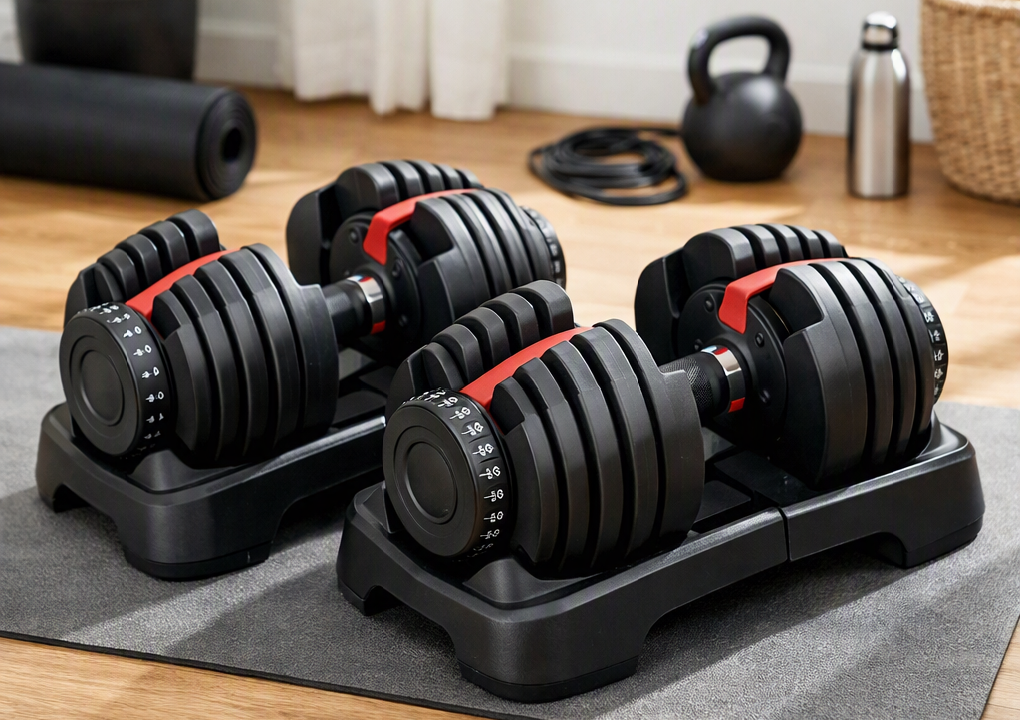
Adjustable dumbbells are one of the most useful pieces of equipment for a small home gym.
Instead of storing several pairs of fixed weights, you can change the resistance as needed. Depending on the model and weight range, one pair can support exercises such as:
- Dumbbell squats
- Biceps curls
- Shoulder presses
- One-arm rows
- Floor presses
- Lunges
What should beginners look for?
Consider these features before making a purchase:
- Weight range: Choose a range that suits your current ability and allows room for gradual progress.
- Easy adjustment: A simple, secure mechanism makes switching between exercises easier.
- Comfortable grip: Handles should feel stable and comfortable in your hands.
- Secure locking system: Check that plates or adjustment mechanisms lock correctly.
- Storage footprint: Make sure the dumbbells and their stand fit your available space.
Selectorized models often allow faster weight changes but can cost more. Plate-loaded models may be more affordable, although changing plates takes longer.
Compare options before deciding: Shop adjustable dumbbells for home workouts.
Budget tip: Don’t pay for a heavier weight range than you need. Choose a safe, manageable starting point and increase resistance as your strength improves.
Always follow the manufacturer’s instructions, secure the weights before lifting, and never exceed the stated weight limits.
3. Add Resistance Bands for Affordable, Space-Saving Workouts
<Insert image: A neatly arranged set of resistance bands beside a workout mat.>
Resistance bands are lightweight, easy to store, and useful for many types of exercise.
They can help you warm up, perform strength exercises, practise mobility movements, and modify certain exercises as your fitness improves.
Different styles serve different purposes:
- Loop bands: Useful for lower-body exercises and lateral steps.
- Mini bands: Helpful for hip and glute exercises.
- Long resistance bands: Suitable for movements such as rows, curls, and presses.
- Handled bands: May offer a more familiar grip for some upper-body exercises.
You don’t need a large collection. A small set with different resistance levels is a sensible starting point.
Shop resistance band sets for home fitness.
How to use resistance bands safely
Check bands for cracks, tears, or thinning before every workout. Use only secure anchors designed for the purpose, and keep the bands away from sharp edges.
Move slowly and control the band’s return instead of allowing it to snap back.
As you become stronger, you can gradually increase resistance or choose more challenging exercises.
4. Choose the Right Exercise Mat
<Insert image: A neutral-colored exercise mat laid out in a small, uncluttered workout area.>
An exercise mat creates a comfortable space for floor exercises, stretching, and core training.
It’s a simple purchase, but the right mat can make your home workout area more practical.
What to consider
Thickness: A thicker mat may feel more comfortable when kneeling or lying down. A thinner, firmer mat may provide better stability for standing movements.
Grip: Look for a surface that grips well and doesn’t slide across your floor.
Size: Choose a mat long enough for your usual exercises without taking up unnecessary storage space.
Cleaning: A wipeable material can make regular maintenance easier.
Compare options here: Shop non-slip exercise mats.
Money-saving tip: You don’t need the most expensive mat. Choose one that suits your workouts, floor type, and comfort needs.
Remember that an exercise mat is not a substitute for suitable protective flooring beneath heavy weights or equipment.
5. Should You Buy a Foldable Bench or Power Tower?
Once you’ve built a consistent routine, you may want equipment that supports more exercises.
However, these items need more room and usually cost more than the basics.
Foldable workout bench
A bench can support seated exercises, incline presses, and other strength movements, depending on its design.
Look for:
- A stable frame
- A suitable weight capacity
- Secure adjustment mechanisms
- A comfortable, durable surface
- A folding design that fits your storage area
Browse options here: Shop foldable weight benches.
Before purchasing, check the manufacturer’s total weight limit, including the user and any weights, as applicable.
Pull-up bar or power tower
A pull-up bar or power tower can support upper-body bodyweight exercises. Some power towers also include dip handles and knee-raise supports.
But bigger doesn’t always mean better.
Measure the equipment’s height and footprint. Check installation requirements, stability, weight limits, and the clearance needed to exercise safely.
Explore compact pull-up bars for home gyms.
If your room is very small, resistance bands and dumbbells may offer better value and easier storage.
Our advice: Add a bench or pull-up station only when your current equipment limits the exercises you genuinely want to perform.
6. Set Up a Small Home Gym Without Creating Clutter
<Insert image: A small, organized home gym with dumbbells, a rolled exercise mat, and resistance bands stored neatly against a wall.>
A home gym doesn’t need to look like a commercial fitness center. It needs to be easy to use, safe, and simple to maintain.
Step 1: Measure your available space
Choose an area where you can stand, bend, step, and stretch without hitting furniture.
You can mark the planned exercise area with removable tape before buying anything. This helps you see whether the setup will work.
Step 2: Keep your most-used equipment accessible
Store dumbbells securely on the floor or a suitable stand. Keep resistance bands in a small container and roll up your mat after use.
Browse compact home gym storage solutions.
You may not need a dedicated organizer at all. An existing shelf or storage basket could work perfectly.
Step 3: Check the floor and surroundings
Place equipment on a stable, level surface. Use appropriate protective flooring where needed, especially beneath heavy weights.
Check overhead clearance before performing standing presses. Leave enough room for lunges, side steps, and other movements.
If you live in an apartment, consider noise, neighbors, building rules, and any restrictions on heavy equipment.
Step 4: Create a simple setup-and-put-away habit
Before each workout, clear the area and check your equipment. Afterward, return everything to its proper place.
This small habit keeps a shared room usable and makes it easier to start your next session.
7. How to Build a Home Gym on a Budget
A good home gym is not about spending the most money. It’s about getting useful equipment that supports regular exercise.
Set a total budget before shopping
Decide how much you can comfortably spend. Then prioritize purchases based on your goals.
For many beginners, a sensible order is:
- Start with bodyweight exercises and any suitable equipment you already own.
- Add resistance bands for more exercise options.
- Buy adjustable dumbbells if strength training is a priority.
- Add a mat if you need more comfort or grip for floor exercises.
- Consider larger equipment only when you have a clear reason.
Your exact spending will depend on the equipment you choose. There is no single amount you must spend to begin.
Compare value, not just discounts
Before purchasing, check product dimensions, weight limits, construction, warranty terms, and what’s included.
A cheap product that wears out quickly may not be the best value. On the other hand, a premium model may include features you’ll never use.
Consider reputable secondhand equipment when you can inspect its condition and verify that it is safe to use.
Avoid these common money traps
- Buying a complete bundle filled with accessories you won’t use.
- Choosing equipment that doesn’t fit your available space.
- Paying extra for features that duplicate equipment you already own.
- Buying weights that are too heavy or too light for your needs.
- Financing equipment that strains your monthly budget.
The best rule: Buy one useful item, use it regularly, and add another only when your routine calls for it.
8. A Simple Beginner Home Workout
You don’t need dozens of exercises to get started. A small selection of manageable movements can help you practise the main movement patterns.
Here’s an example of a simple full-body session.
| Exercise | Starting amount | Main focus |
|---|---|---|
| Chair-assisted squats | 8–10 repetitions | Legs |
| Wall or incline push-ups | 6–10 repetitions | Chest and arms |
| Light dumbbell rows | 8–10 per side | Back |
| Glute bridges | 8–12 repetitions | Hips and glutes |
| Light dumbbell curls | 8–10 repetitions | Arms |
| Standing or floor-based core exercise | 10–20 seconds, as appropriate | Core control |
Adjust the movements and repetitions to your current ability. These numbers are examples, not targets you must achieve immediately.
How often should you exercise?
If you’re new to strength training, start with two manageable sessions per week, with recovery time between them. You can add gentle walking or mobility work on other days if appropriate.
During each session:
- Warm up with a few minutes of comfortable movement.
- Choose a manageable resistance.
- Use controlled movements and breathe steadily.
- Rest when needed.
- Stop if you experience sharp pain, dizziness, or unusual symptoms.
If you’re unsure how to perform an exercise safely, seek guidance from a qualified fitness professional. If you have an injury or health concern that affects exercise, ask an appropriate healthcare professional about suitable modifications.
How can you make progress?
Once an exercise feels comfortable and controlled, you can gradually increase repetitions, add a small amount of resistance, or try a more challenging variation.
Change one thing at a time. You don’t need to make every workout harder.
A simple notebook or workout app can help you record your exercises, repetitions, resistance, and how each session feels.
9. Common Home Gym Mistakes to Avoid
Even a budget-friendly setup can become a waste of money if you choose equipment without a plan.
Mistake 1: Buying too much too soon. Start with a few versatile items instead of filling your home with equipment you may rarely use.
Mistake 2: Ignoring measurements. Check the dimensions of your equipment and allow enough space to move safely.
Mistake 3: Choosing the cheapest option every time. Compare quality, stability, durability, and warranty terms—not just the price.
Mistake 4: Skipping safety checks. Inspect bands, secure adjustable weights, and check hinges, pins, and other moving parts before exercising.
Mistake 5: Having equipment without a routine. A simple weekly plan is more useful than a collection of unused fitness products.
Mistake 6: Expecting instant results. Fitness develops over time. Focus on manageable workouts and gradual improvement rather than quick fixes.
10. Your Compact Home Gym Shopping Checklist
Before you buy, use this checklist to keep your setup practical.
- I have identified my main fitness goals.
- I have measured my available workout space.
- I have set a realistic spending limit.
- I have checked product dimensions and safety limits.
- I have compared quality, price, and warranty information.
- I have selected equipment I’ll use regularly.
- I have planned where each item will be stored.
- I have a simple weekly workout schedule.
- I will add equipment gradually instead of buying everything at once.
Frequently Asked Questions
Can I build a home gym in a small apartment?
Yes. A pair of adjustable dumbbells, resistance bands, and an exercise mat can provide a practical starting point. Choose exercises that fit your space and consider noise and building restrictions.
What is the best home gym equipment for beginners?
For general strength training, adjustable dumbbells and resistance bands are versatile options. A mat can also be useful for floor exercises and stretching. Your best choice depends on your goals, budget, and available space.
How much money do I need to start?
You can begin with bodyweight exercises and gradually purchase equipment as your needs become clearer. You don’t need to buy everything at once, and you don’t need an expensive all-in-one machine to start exercising.
Is adjustable equipment worth the cost?
It can be. Adjustable dumbbells may replace several pairs of fixed weights and save storage space. However, compare adjustment speed, durability, weight range, and total cost before deciding.
How do I keep my home gym organized?
Give each item a designated storage place. Keep weights secure, store bands in a small container, and put away equipment after every session. Avoid placing heavy objects where they could fall.
Should I buy a smart home gym machine?
Not necessarily. Smart machines can provide guided workouts and additional features, but they may cost considerably more than basic equipment. Start with your goals and budget, and consider a smart machine only if its features offer clear value to you.
Final Thoughts: Keep It Small, Smart, and Consistent
Building a compact home gym doesn’t have to be complicated or expensive.
Start with a clear goal, choose versatile equipment, organize your space, and build a routine you can realistically maintain.
For most beginners, adjustable dumbbells, resistance bands, and a suitable exercise mat are a practical place to start. A bench, pull-up station, or other equipment can come later if your needs change.
Remember, the best home gym is the one that fits your life and helps you keep moving.
Start small. Train consistently. Spend wisely.
Ready to build your setup? Compare the essentials, choose the equipment that meets your needs, and make your first step toward a more active lifestyle today.
Explore home gym equipment on Amazon.
Affiliate reminder: Replace the sample tracking ID in all Amazon links with your own valid Associates tracking ID. Keep your affiliate disclosure visible and follow the current policies of Amazon Associates and any other affiliate programs you use.