
Small-Space Harvests: A Beginner’s Guide to Growing a Thriving Container Garden
Small-Space Harvests: A Beginner’s Guide to Growing a Thriving Container Garden
Dreaming of fresh vegetables, fragrant herbs, and homegrown tomatoes—but don’t have a backyard? Container gardening makes it possible to grow your own food on a balcony, patio, porch, or sunny windowsill.
You don’t need a large garden or years of experience to get started. With the right containers, good potting mix, enough sunlight, and a little regular care, even a small space can become a productive garden.
In this guide, you’ll learn how to choose the best containers, grow beginner-friendly vegetables, save space, avoid common mistakes, and find useful gardening tools without overspending.
Ready to grow your first harvest? Let’s get started.
What You’ll Learn
- How to choose containers that suit your space and plants
- The best vegetables and herbs for beginners
- How to select soil, water plants, and provide enough sunlight
- Smart ways to grow more food in less space
- Essential gardening supplies worth considering
- Simple solutions to common container gardening problems
1. Why Container Gardening Is Perfect for Small Spaces
Container gardening means growing plants in pots, planters, grow bags, or other suitable containers instead of planting directly in the ground.
It’s an excellent option for apartment dwellers, renters, beginners, and anyone who wants fresh produce without maintaining a traditional garden.
Here’s why it works so well:
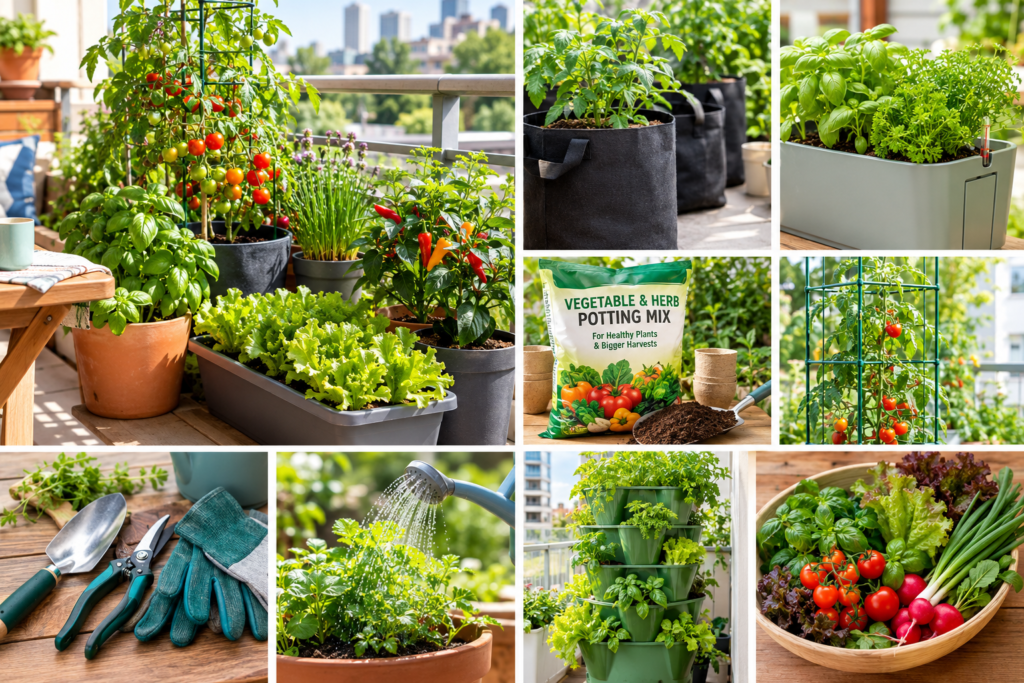
Make the most of limited space. Place containers along a sunny wall, on a patio, or beside a balcony railing where permitted.
Grow what you actually eat. Choose herbs for everyday cooking, lettuce for salads, or cherry tomatoes for fresh snacks.
Control your growing conditions. You can select the growing mix, move suitable containers to better light, and manage watering more easily.
Start with a small budget. A few pots, seeds, and potting mix are enough to begin. You can add more supplies as your gardening skills improve.
Keep gardening manageable. Start with three or four containers rather than filling every available corner.
The secret is simple: choose plants that fit your space instead of trying to fit too many plants into your space.
2. Choose the Right Containers
The container you choose affects how well your plants grow. Roots need room, moisture must drain properly, and the pot must be large enough to support the mature plant.
Which container should you choose?
Plastic pots: Lightweight, affordable, and easy to move. They generally retain moisture longer than unglazed terracotta.
Fabric grow bags: A space-saving option for vegetables such as tomatoes, peppers, and potatoes. They allow good airflow around the roots but may dry out faster.
Self-watering planters: Useful for busy gardeners who want a water reservoir to help maintain moisture. They still need monitoring and occasional refilling.
Vertical planters: Help you grow herbs, leafy greens, and some compact crops when floor space is limited.
Hanging planters: Suitable for trailing herbs and strawberries, provided the structure can safely support the weight.
Shop the right containers for your garden
Beginner tip: Before buying anything, measure your available space and check how much sunlight it receives. Also consider the weight of containers after they are filled with wet soil.
How big should your pots be?
| Plant | Suggested container |
|---|---|
| Basil and other compact herbs | 1–2 gallons |
| Lettuce and leafy greens | About 1–3 gallons |
| Radishes | About 1–2 gallons |
| Compact peppers | About 3–5 gallons |
| Cherry tomatoes | About 5 gallons or larger |
| Cucumbers | About 5 gallons or larger, with support |
These are starting guidelines, not strict rules. Plant variety, root depth, and growing conditions can change the size needed. Always check the seed packet or plant label.
Important: Choose containers with drainage holes unless the planter has a properly designed alternative drainage system. Standing water can damage roots.
3. Use the Right Soil for Healthy Growth
Good soil helps roots breathe, hold moisture, and absorb nutrients. It can make the difference between a struggling container garden and healthy, productive plants.
For most vegetables grown in pots, use a quality potting mix formulated for containers.
Avoid filling pots with ordinary garden soil alone. It can become compacted in containers and restrict drainage and airflow.
What should your potting mix contain?
Look for a mix that provides:
- Good drainage and airflow
- Enough moisture retention for the plant
- A suitable growing environment for roots
- Nutrients or a clear recommendation for feeding
Some mixes contain compost or fertilizer, while others require additional nutrients later.
Helpful gardening products
Quality potting mix
Vegetable Potting Mix. A container-specific mix is a sensible starting point for most beginner vegetable gardens.
Compost
Garden Compost. Compost can improve a suitable growing mix and contribute nutrients. Use it according to the needs of your plants and the potting mix.
Slow-release fertilizer
Vegetable Garden Fertilizer. Container plants have limited access to nutrients, so feeding may be necessary during the growing season. Choose a fertilizer suitable for the crops you are growing and follow the label.
Money-saving tip: Start with one good potting mix and a fertilizer suited to your crops. You don’t need to purchase every gardening product available.
4. Pick Easy Vegetables and Herbs for Beginners
Your first container garden should be enjoyable, not overwhelming. Choose a few plants that match your sunlight, climate, and cooking habits.
Best beginner-friendly plants
Lettuce
Lettuce grows well in relatively shallow containers and is useful for repeated leaf harvesting. It often performs best in cooler weather or partial shade during hot periods.
Radishes
Radishes can mature quickly and fit into relatively small spaces. Choose a container with enough depth for the variety you plant.
Basil
Basil is a useful kitchen herb that grows well in a sunny location. Harvesting the growing tips regularly can encourage a bushier plant.
Cherry tomatoes
Compact cherry tomato varieties can produce plenty of fruit in containers. They need ample sunlight, a sufficiently large pot, consistent watering, and support when required.
Peppers
Peppers can thrive in containers with enough warmth, sunlight, and root space. Compact varieties are particularly useful for small patios.
Green onions
Green onions are practical for small gardens and everyday cooking. Choose a container that provides enough depth for the variety.
What should you grow first?
If you’re a complete beginner, try this simple combination:
- One pot of basil
- One container of lettuce
- One container of radishes
- One larger pot of cherry tomatoes, if your space gets enough direct sun
This gives you a mix of herbs, leafy greens, quick-growing vegetables, and a fruiting crop without requiring a large garden.
Find seeds and starter supplies
Choose varieties labeled for containers or compact growth whenever possible. Check the recommended planting season for your location before purchasing seeds.
5. Give Your Plants the Right Amount of Sunlight
Sunlight is one of the most important factors in container gardening.
Different plants have different needs. Fruiting vegetables such as tomatoes and peppers generally require more direct sunlight than many leafy greens.
As a broad guide:
- About 6–8 hours of direct sunlight: Often suitable for tomatoes and peppers.
- About 4–6 hours: May suit some herbs and leafy crops, depending on conditions.
- Less direct sunlight: Consider shade-tolerant leafy greens or suitable indoor growing options.
These ranges vary by plant variety, climate, and season.
How to check your space
- Observe your balcony, patio, or windowsill throughout the day.
- Note when direct sunlight reaches the growing area.
- Look for shade from nearby buildings, walls, trees, or railings.
- Choose plants that match the light you actually have.
If your balcony receives only morning sun, for example, leafy greens and some herbs may be a better starting point than sun-loving tomatoes.
Helpful product: A simple garden thermometer can help you monitor temperature, especially during extreme weather.
6. Water Your Container Garden Correctly
Containers often dry out faster than garden beds because they hold a limited amount of growing mix.
However, watering too frequently can also cause problems. The goal is to maintain suitable moisture without leaving roots sitting in water.
A simple watering routine
Step 1: Check the soil. Touch the surface and, when possible, check moisture a little below it.
Step 2: Water when needed. Add water slowly and thoroughly, allowing excess water to drain from the container.
Step 3: Check again during hot weather. Small pots, fabric grow bags, and exposed containers may dry quickly.
Step 4: Adjust to the plant. Seedlings, mature vegetables, and drought-tolerant herbs do not always need the same watering schedule.
Avoid relying on a fixed calendar alone. Weather, container size, plant growth, and potting mix all affect how often you need to water.
Tools that make watering easier
A watering can with a narrow spout is useful for reaching plants without splashing soil everywhere.
A hose with an adjustable nozzle can help if you have a larger patio garden.
A moisture meter may provide an additional reference, although you should still learn to check your soil and observe your plants.
Quick reminder: Wilting can be caused by either too little or too much water. Check the soil before watering again.
7. Grow More Food by Using Vertical Space
When floor space is limited, growing upward can help you make better use of the area.
Vertical gardening uses trellises, supports, shelves, and suitable wall-mounted systems to increase growing space without spreading containers across the floor.
Three ways to grow vertically
Use a trellis.
Cucumbers, pole beans, and some tomato varieties benefit from suitable support. Secure the structure safely and guide plants as they grow.
Use a vertical planter.
Stacked or tiered planters can accommodate herbs and leafy greens. Check that every level receives enough light and water.
Add shelves for smaller pots.
A stable shelf can hold compact herb pots or seedling containers. Avoid overcrowding plants or blocking sunlight to lower shelves.
Useful space-saving products
Before installing shelves, trellises, or hanging containers, check weight limits and make sure everything is securely supported.
8. Essential Tools for a Beginner Container Garden
You can start with very few tools. Buy what solves a real problem in your garden rather than filling a shopping cart with unnecessary accessories.
Here are the most useful items to consider.
1. Hand trowel
Garden Hand Trowel. Useful for filling containers, planting seedlings, and mixing small amounts of growing material.
2. Pruning snips
Garden Pruning Snips. Helpful for harvesting herbs, removing damaged leaves, and cutting stems cleanly.
3. Watering can
Watering Can. A basic watering can gives you control over where water goes, particularly in crowded spaces.
4. Plant labels
Labels help you remember what you planted and when you planted it. They are especially useful when several seedlings look alike.
[INSERT YOUR AFFILIATE LINK — Reusable Plant Labels]
5. Garden gloves
Gloves can help keep your hands clean and protect them during routine gardening tasks.
[INSERT YOUR AFFILIATE LINK — Gardening Gloves]
Budget-friendly approach: Begin with containers, potting mix, seeds or starter plants, and a way to water them. Add specialized tools only when you need them.
9. Common Container Gardening Mistakes to Avoid
Even experienced gardeners lose plants occasionally. The key is to learn from problems before they spread to the rest of your garden.
Choosing pots that are too small
Small pots can restrict root growth and dry out quickly.
The fix: Check the mature plant’s recommended container size before planting.
Using ordinary garden soil
Garden soil alone may compact inside a pot and drain poorly.
The fix: Use a suitable container potting mix.
Watering too much
Constantly wet soil can reduce the oxygen available to roots.
The fix: Check soil moisture and ensure proper drainage.
Ignoring sunlight
A plant can struggle even when the watering and soil are correct if it receives too little light.
The fix: Match each crop to the light available in your growing area.
Planting too many vegetables together
Crowded plants compete for light, water, nutrients, and root space.
The fix: Follow recommended spacing and allow room for mature growth.
Buying too many supplies at once
It is easy to spend more on equipment than necessary before learning what works in your space.
The fix: Start small and upgrade gradually.
10. Your First 7 Days of Container Gardening
You don’t have to finish everything in one weekend. Use this simple plan to get your first garden started.
Day 1: Choose your space.
Measure the available area and observe its sunlight.
Day 2: Pick your plants.
Choose three or four beginner-friendly crops that suit your conditions.
Day 3: Select containers.
Check pot size, drainage, stability, and available space.
Day 4: Prepare your supplies.
Gather potting mix, seeds or starter plants, and a watering can.
Day 5: Plant your garden.
Follow the seed packet or plant label for planting depth and spacing.
Day 6: Check moisture and light.
Make sure your plants are receiving the right conditions.
Day 7: Establish a routine.
Check soil moisture, inspect leaves, and note any changes. Continue adjusting care as your plants grow.
Some plants will take weeks or months to produce food. The first week is about building a good foundation, not rushing to harvest.
Frequently Asked Questions
Can I grow vegetables on an apartment balcony?
Yes. Many vegetables and herbs can grow in containers on a balcony, provided you have suitable sunlight, space, drainage, and permission to install any necessary supports.
What is the easiest vegetable to grow in a container?
Lettuce, radishes, and green onions can be good starting choices. The best option depends on your climate, available sunlight, and the time of year.
Do container gardens need fertilizer?
Often, yes. Repeated watering can carry nutrients out of containers, and plants have limited growing space. Follow the potting mix instructions and use a fertilizer appropriate for your crops.
How often should I water container plants?
There is no single schedule that works for every garden. Check soil moisture regularly and adjust for temperature, container size, plant type, and weather.
Can I reuse potting mix?
Sometimes. Healthy potting mix can often be reused after removing old roots and plant debris and checking its condition. Refresh it as needed. If a previous plant had a serious soil-borne disease or pest problem, replace the mix rather than risk spreading it.
How much does a beginner container garden cost?
Costs vary depending on the number and size of containers, the plants you choose, and what supplies you already own. Start with a few containers and basic supplies to keep initial spending under control.
Final Thoughts: Start Small and Enjoy the Harvest
A thriving container garden doesn’t require a large backyard, expensive equipment, or perfect gardening skills.
Start with a few suitable containers, choose plants you enjoy eating, provide the right light, and learn how to manage water and nutrients. As you gain confidence, you can expand your garden with vertical planters, additional vegetables, and useful tools.
The most important step is to begin with the space you have.
Ready to start growing? Choose your first containers, select a few easy crops, and build your small-space garden one plant at a time.
Affiliate Disclosure
This article may contain affiliate links. If you purchase through these links, limaffiliate.com may earn a commission at no additional cost to you. We aim to recommend products that are relevant to the topic and useful to our readers.